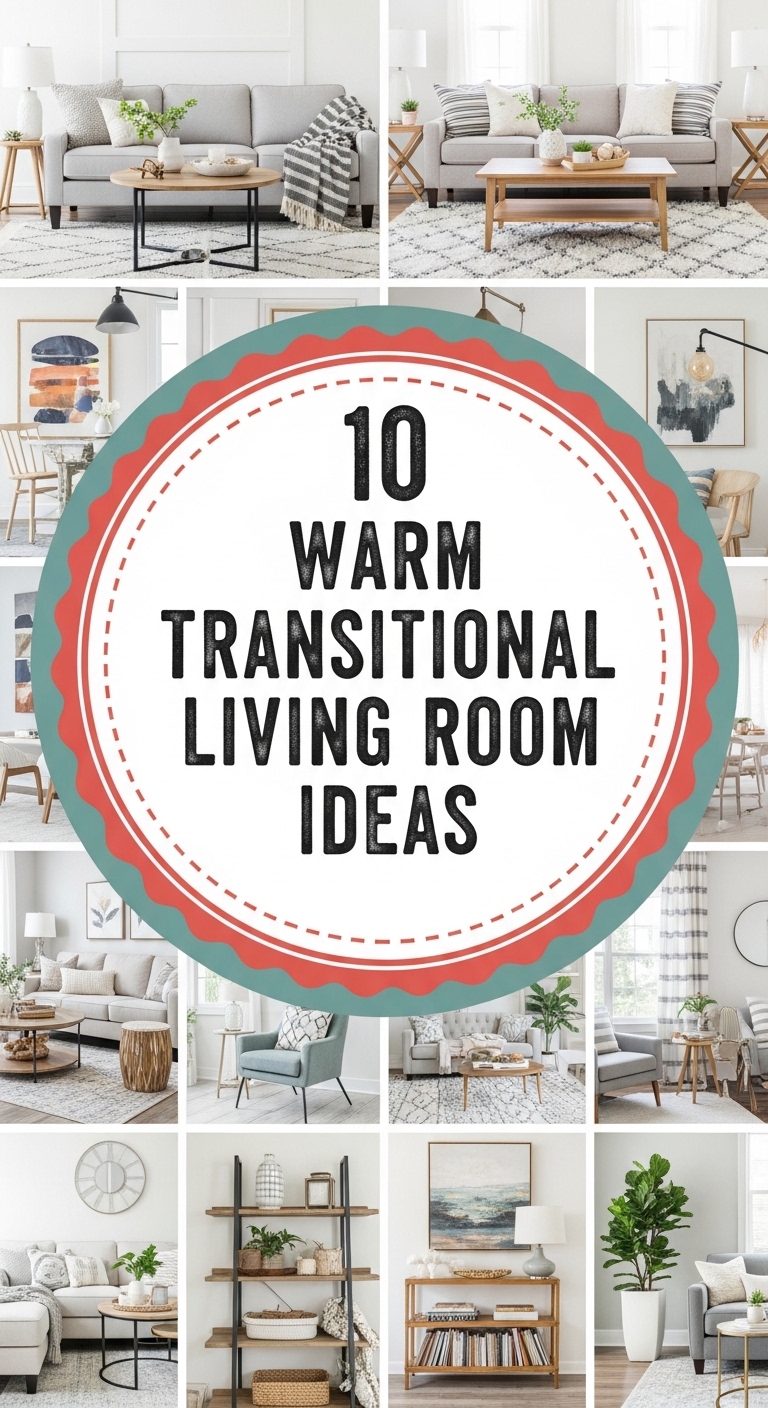
Transitional living rooms strike a perfect balance between traditional and contemporary design, offering a space that feels timeless yet fresh. They combine the best of both worlds: the classic charm of traditional décor with the clean lines and minimalism of modern style. Achieving a warm transitional living room is about carefully choosing colors, textures, furniture, and accessories that create a welcoming, cohesive space. Here are 10 inspiring ideas to help you design a transitional living room that is both stylish and cozy.

1. Neutral Color Palette with Warm Accents
Start with a neutral foundation for walls, floors, and large furniture pieces. Soft beige, creamy white, or light gray works beautifully for a transitional backdrop. Warmth can then be added with accent colors through throw pillows, rugs, and artwork. Shades like burnt orange, mustard yellow, or terracotta bring life without overpowering the space. This combination makes the room inviting while maintaining a sophisticated, balanced look.

2. Mix of Traditional and Modern Furniture
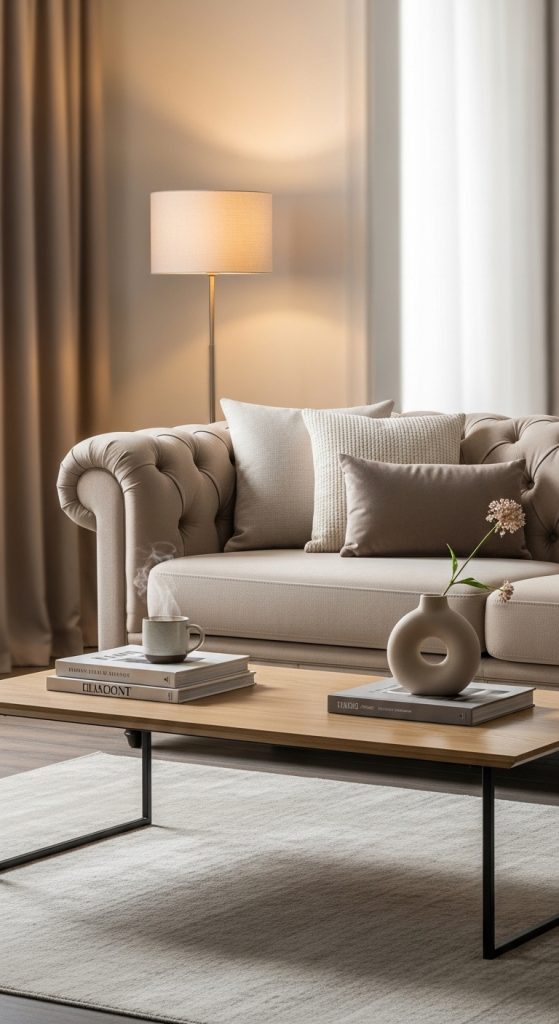
A hallmark of transitional design is blending traditional and contemporary furniture. Pair a classic tufted sofa with a sleek, minimalist coffee table, or combine a vintage armchair with modern side tables. This mix ensures the space feels curated rather than chaotic. Keep the scale and proportion of pieces in mind so that they complement rather than compete with one another.
3. Layered Textures for Depth
Warmth in a transitional living room often comes from texture. Combine soft fabrics like velvet or chenille with natural elements such as wood, rattan, or stone. A wool rug under a wooden coffee table, silk throw pillows on a linen sofa, or a leather armchair can add layers that make the room feel more inviting. Don’t be afraid to mix different textures in subtle, harmonious ways to create visual interest.

4. Statement Lighting
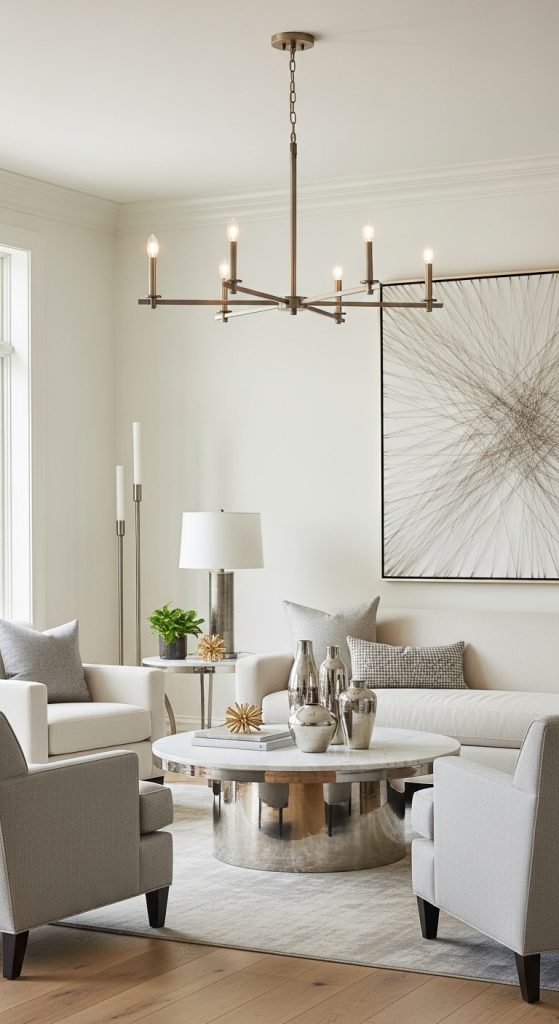
Lighting can dramatically transform a living room. A transitional space benefits from a combination of functional and decorative lighting. Chandeliers or pendant lights with clean lines but classic finishes, like brushed nickel or bronze, make excellent statement pieces. Floor lamps with neutral shades and table lamps with subtle curves can add warmth while enhancing the room’s architectural details.
5. Artwork and Wall Décor
In transitional spaces, artwork acts as a bridge between traditional and modern elements. Abstract pieces in muted tones work well above a classic sofa, while framed black-and-white photography can add contemporary sophistication. Consider mixing gallery walls with a few larger statement pieces to maintain balance and avoid visual clutter.

6. Cozy Area Rugs
Rugs are essential for warmth and grounding in a transitional living room. A large, neutral-toned rug with subtle patterns can anchor the furniture and add a touch of comfort. Layering smaller rugs on top of larger ones is a modern approach that introduces texture and depth while maintaining cohesion with the overall color palette.

7. Functional Built-Ins
Built-in shelves or cabinets combine style and practicality. A transitional living room benefits from sleek, custom-built storage that blends with the architecture. Painted in neutral colors or wood tones, these built-ins offer a space for books, décor, and personal collections while keeping the room uncluttered.

8. Mix of Natural and Metallic Finishes
A combination of natural materials and metallic accents adds warmth and interest. Think wooden coffee tables with brass hardware, leather armchairs with steel legs, or woven baskets with gold or bronze details. Metallics reflect light and add sophistication, while natural finishes provide grounding, tactile warmth.

9. Thoughtful Window Treatments
Window treatments can make a big difference in transitional living rooms. Opt for floor-to-ceiling curtains in light fabrics like linen or cotton. Neutral shades work well, but you can also choose soft patterns or textures to add warmth. Layering curtains with shades or blinds offers functionality and visual depth while maintaining a balanced aesthetic.

10. Greenery and Natural Elements
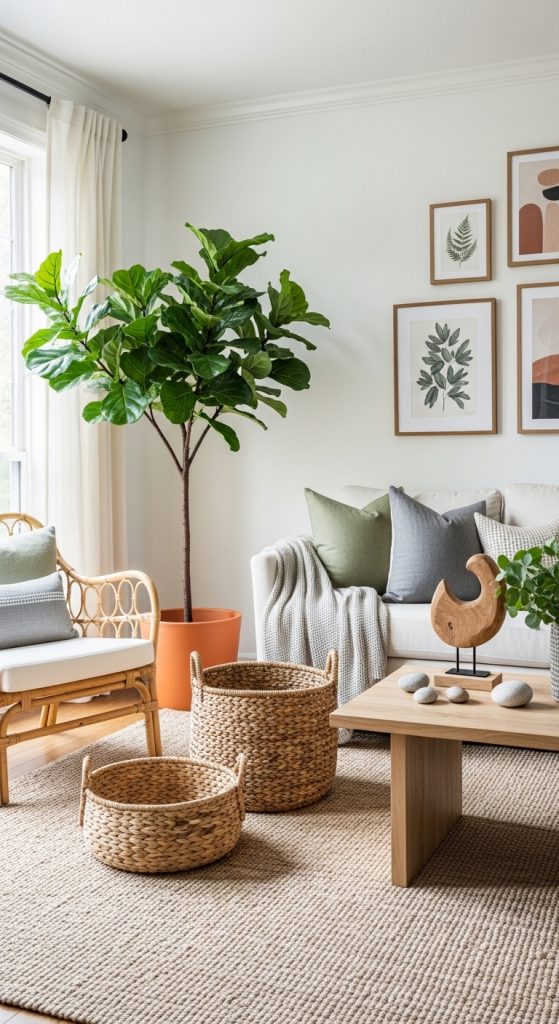
Plants and natural elements bring life and warmth to a transitional living room. Large potted plants, leafy ferns, or small succulents add freshness and color. Wood, stone, and woven accessories enhance the organic feel. Incorporating nature softens the room’s lines and adds a welcoming touch that complements both traditional and modern elements.
Final Thoughts
Creating a warm transitional living room is all about balance. By blending classic and contemporary elements, layering textures, and carefully choosing colors, you can craft a space that feels timeless, stylish, and inviting. Each design choice—from furniture and lighting to artwork and greenery—plays a part in creating a cohesive, warm environment. Whether you prefer subtle sophistication or bold statements, these transitional living room ideas provide a roadmap to designing a room that feels both comfortable and elegant.
Leave a Reply