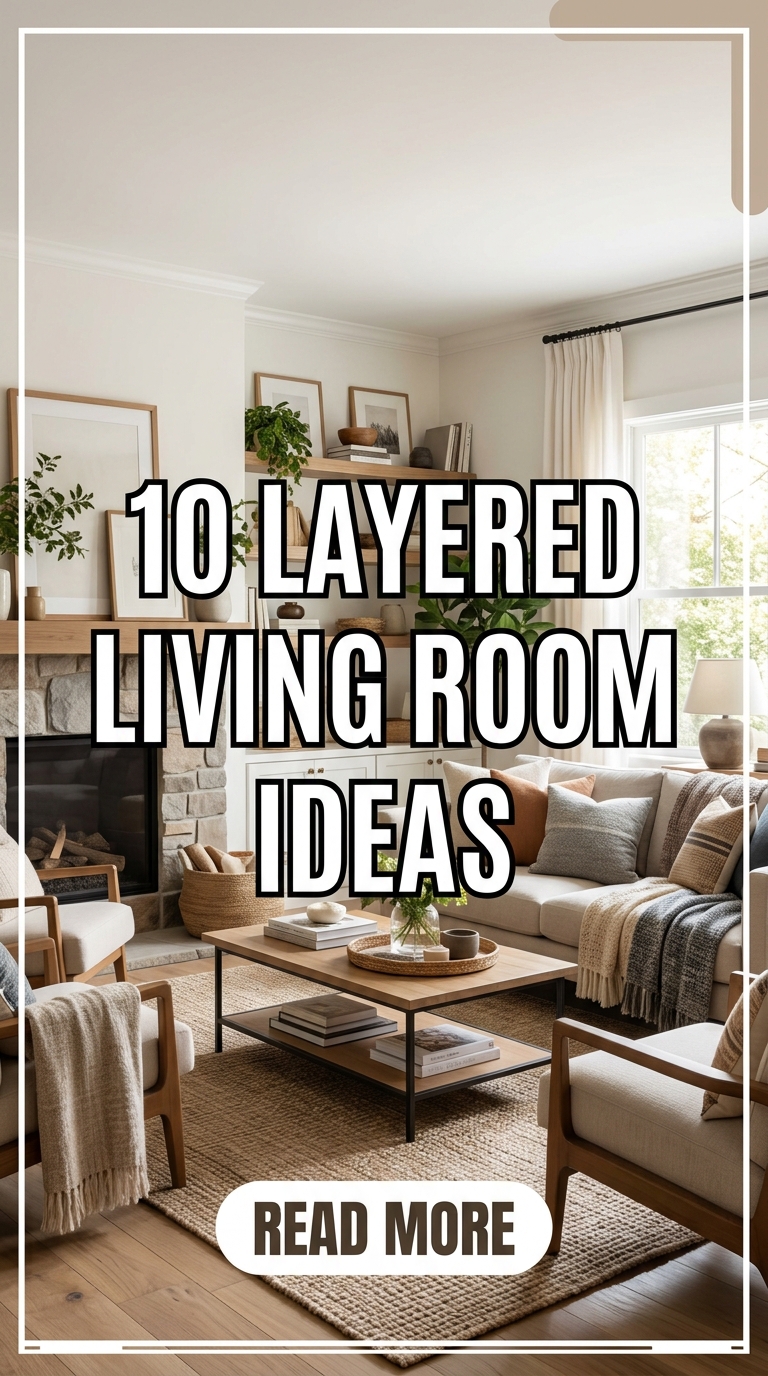
A beautifully layered living room feels warm, inviting, and thoughtfully designed. Layering is one of the most effective interior design techniques because it adds depth, texture, personality, and comfort to a space. Instead of relying on a single style or color, layered living rooms combine different materials, patterns, furniture pieces, lighting elements, and decorative accents to create a balanced and visually appealing environment.
Whether your style is modern, farmhouse, bohemian, traditional, or contemporary, layering can help transform an ordinary room into a sophisticated and welcoming retreat. The key is to mix elements in a way that feels intentional while maintaining harmony throughout the space.
Here are ten inspiring layered living room ideas to help you create a cozy and stylish home.
1. Layer Multiple Rugs for Added Texture
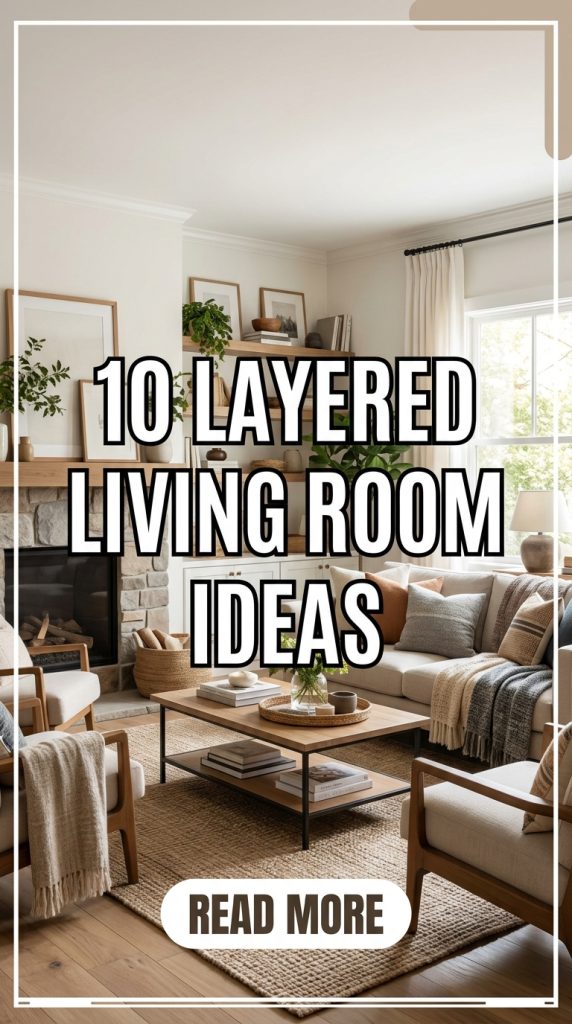
One of the easiest ways to create depth in a living room is by layering rugs. Start with a large neutral rug that covers most of the floor space. Then place a smaller patterned or textured rug on top to add visual interest.
Natural fiber rugs such as jute or sisal work beautifully as a base layer, while colorful Persian, vintage, or geometric rugs can provide contrast. This technique not only makes the room feel more luxurious but also helps define seating areas and adds warmth underfoot.
2. Mix Different Throw Pillows
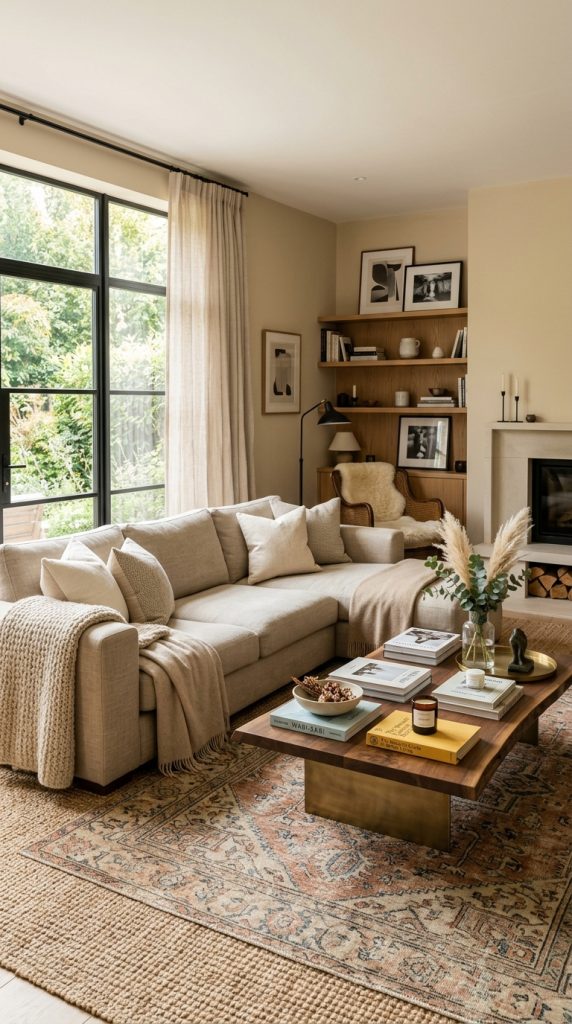
Layering pillows is a simple yet effective way to elevate your living room design. Instead of matching every pillow, combine various sizes, fabrics, patterns, and colors.
Pair velvet pillows with linen cushions, or mix solid-colored pillows with floral or geometric prints. Using an odd number of pillows often creates a more relaxed and designer-inspired appearance. The combination of textures adds depth and makes the seating area feel more comfortable and inviting.
3. Create Depth with Layered Lighting
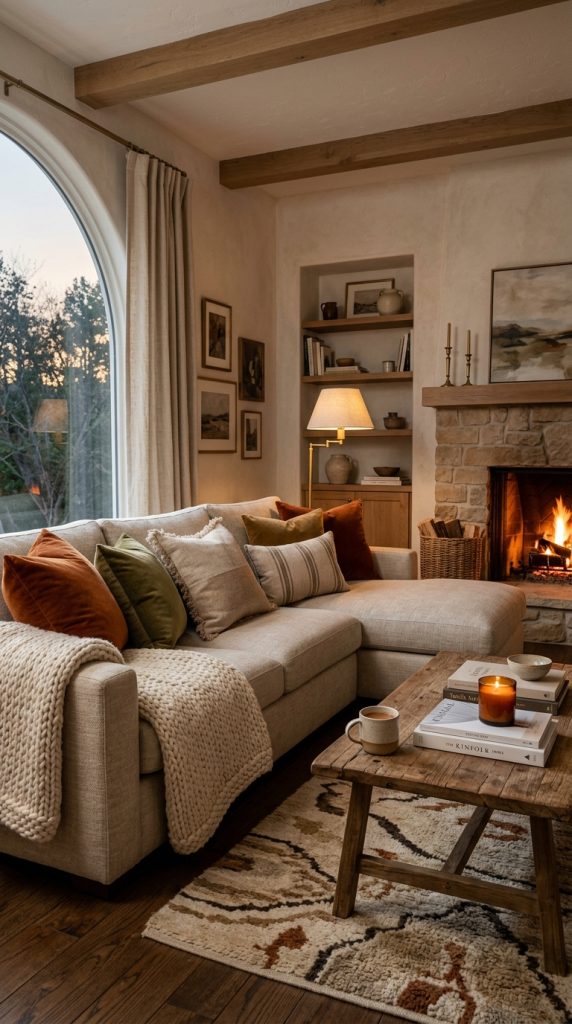
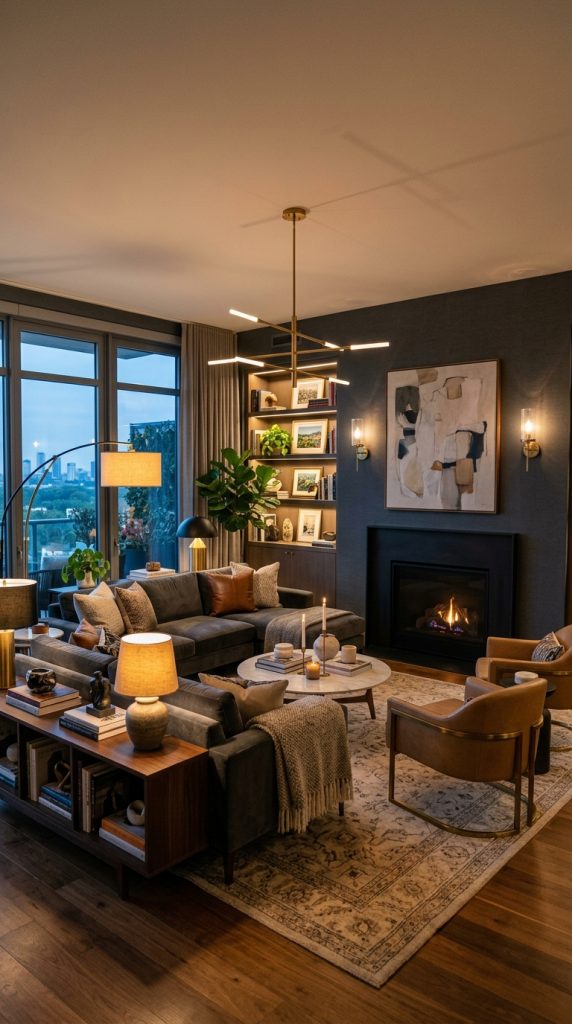
Lighting plays a major role in creating a layered living room. Rather than depending on a single ceiling fixture, incorporate multiple light sources throughout the space.
Use a combination of overhead lighting, floor lamps, table lamps, wall sconces, and accent lighting. This layered approach helps create ambiance while ensuring the room remains functional. Soft lighting from different heights also makes the space feel more intimate and welcoming during the evening hours.
4. Incorporate Various Textures
Texture is essential when designing a layered room. Combining different materials prevents the space from feeling flat or one-dimensional.
Consider mixing velvet sofas, woven baskets, knitted throws, wooden furniture, metal accents, and glass décor pieces. The contrast between soft and hard surfaces creates visual balance and adds richness to the overall design. Even neutral color schemes become more dynamic when multiple textures are introduced.

5. Style Your Coffee Table in Layers
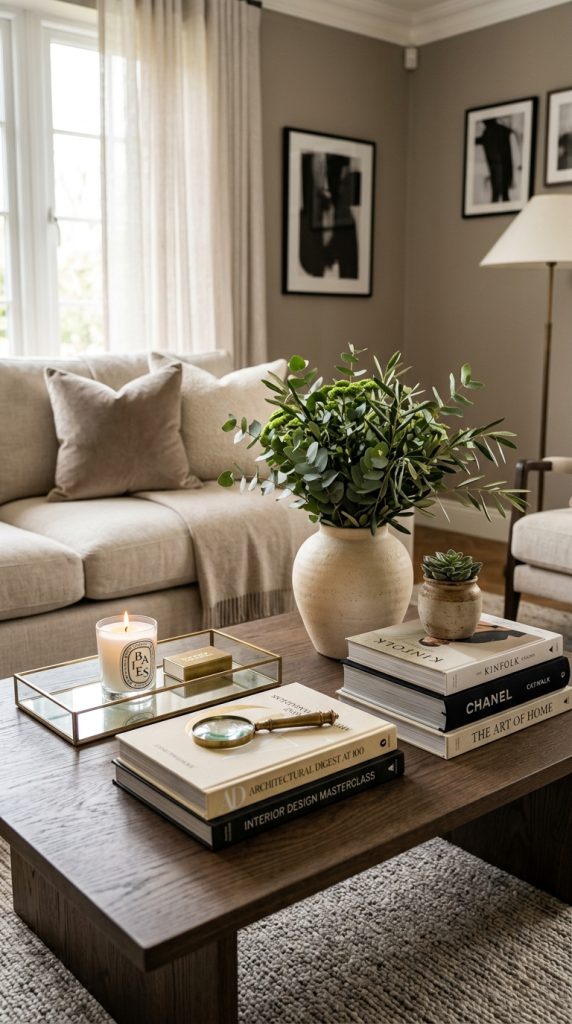
A thoughtfully styled coffee table can serve as the centerpiece of a layered living room. Instead of placing a single decorative item on the table, build a composition using several elements.
Stack books, add decorative trays, place candles, include small plants, and incorporate sculptural objects. Varying heights and shapes helps create an attractive arrangement that feels curated rather than cluttered. This technique instantly adds sophistication and personality to the room.
6. Layer Wall Art and Decorative Accents
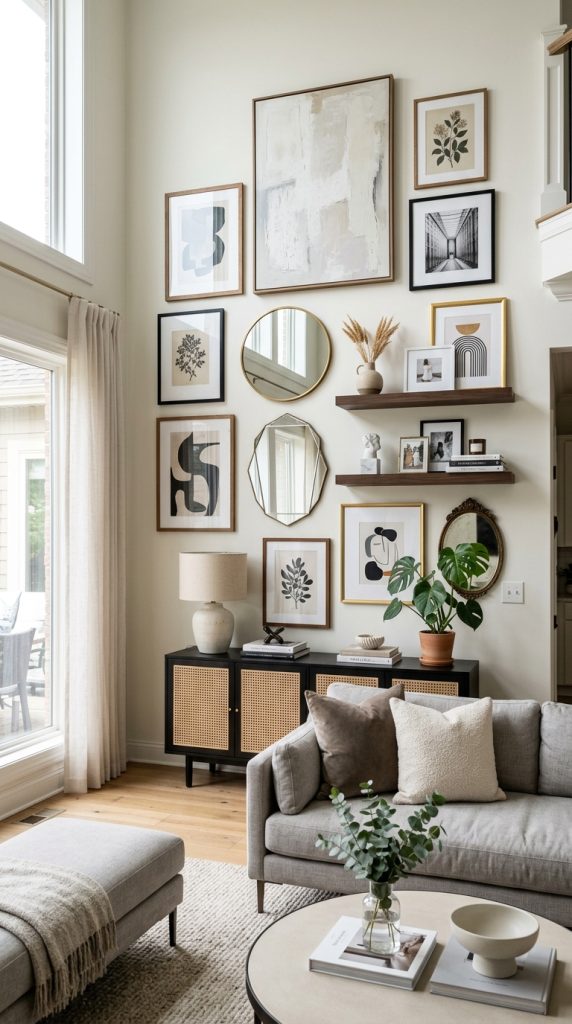
Walls offer a perfect opportunity to add visual depth. Instead of hanging a single piece of artwork, consider creating a gallery wall or layering decorative elements.
Mix framed prints, mirrors, wall sculptures, and floating shelves to create an interesting focal point. Leaning larger artwork against the wall on a console table or mantel can also contribute to a relaxed and stylish layered look. This approach makes the space feel collected over time rather than overly staged.
7. Use Curtains for Softness and Dimension
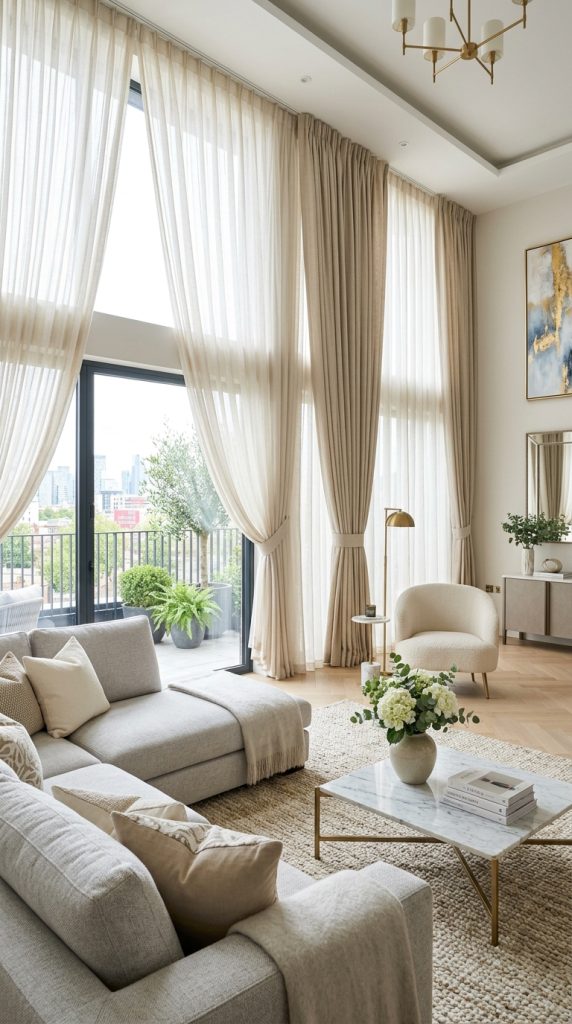
Window treatments are often overlooked, but they play an important role in layering a living room. Floor-to-ceiling curtains add elegance while introducing softness to the space.
For a luxurious appearance, combine sheer curtains with heavier drapes. The sheers allow natural light to filter through during the day, while the outer curtains provide privacy and texture. This layered window treatment creates depth and makes ceilings appear higher.
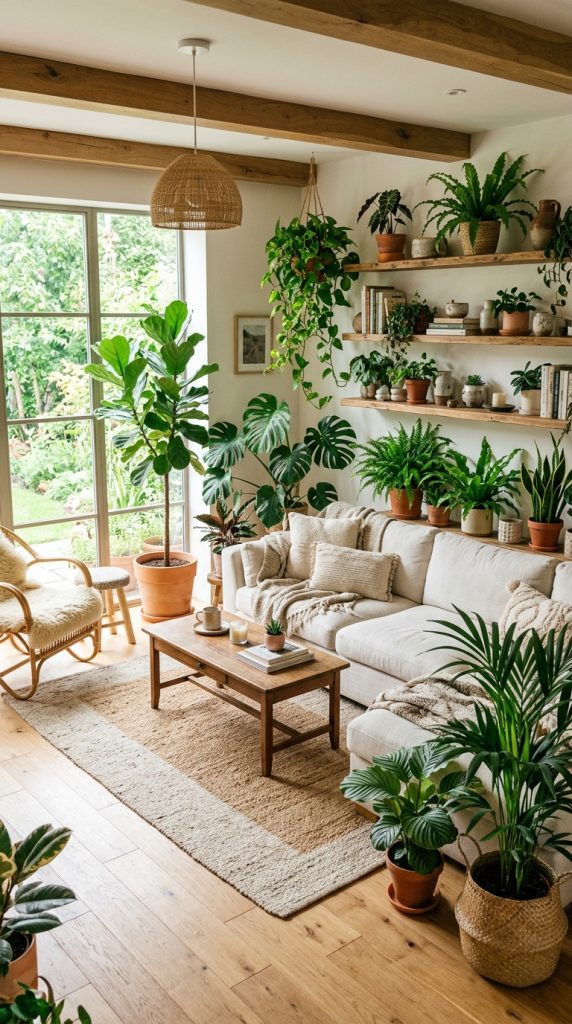
8. Add Layers with Greenery
Plants bring life, color, and texture into a living room. Using plants of varying sizes helps create a naturally layered aesthetic.
Place a large floor plant in a corner, medium-sized plants on side tables, and smaller greenery on shelves or coffee tables. Mixing different leaf shapes and planters further enhances visual interest. Beyond their decorative value, plants also help create a calm and refreshing atmosphere.
9. Combine Furniture Shapes and Heights
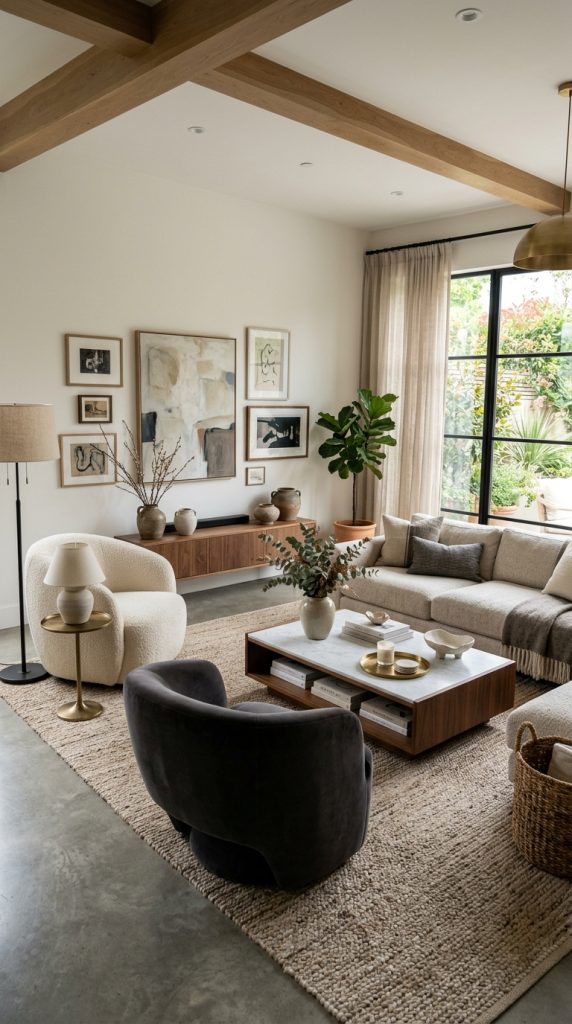
Layering isn’t limited to fabrics and décor. Furniture arrangement also contributes to the overall depth of a room.
Mix furniture pieces with different silhouettes, heights, and materials. Pair a low-profile sofa with a tall floor lamp, or combine round side tables with a rectangular coffee table. Varying proportions create movement throughout the room and prevent the design from feeling repetitive.
A balanced mix of shapes makes the space more visually engaging while maintaining functionality.
10. Decorate Shelves with Purpose
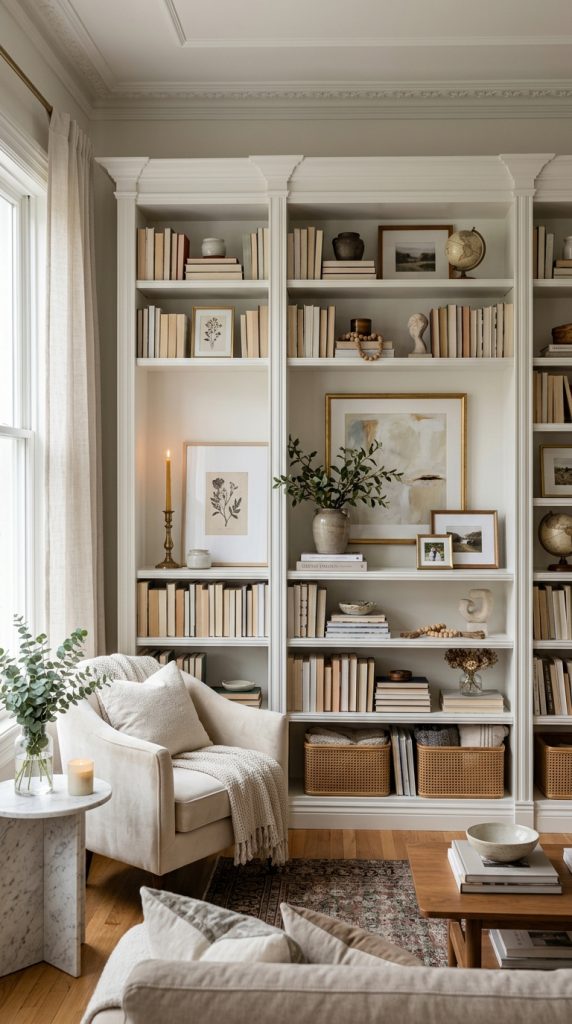
Bookshelves and built-in units provide excellent opportunities for layering decorative elements. Instead of filling every shelf uniformly, vary the arrangement of objects.
Combine books, vases, framed photos, candles, baskets, and decorative sculptures. Layer items by placing smaller objects in front of larger ones and mixing vertical and horizontal stacks of books. Leaving some negative space helps the display feel organized and intentional.
Well-styled shelves add character while contributing to the overall layered design of the room.
Final Thoughts
Layering is one of the most powerful techniques for creating a living room that feels comfortable, stylish, and full of personality. By thoughtfully combining textures, lighting, furniture, rugs, artwork, and decorative accessories, you can transform even the simplest room into a welcoming retreat.
The beauty of layered design is that it allows you to showcase your personal style while creating depth and warmth. Whether you choose to start with layered rugs, cozy textiles, or curated décor arrangements, each element contributes to a space that feels collected, lived-in, and uniquely yours.
With these ten layered living room ideas, you can design a room that is both visually stunning and incredibly inviting for family and guests alike.
Leave a Reply