
The living room is the heartbeat of the home—a place for relaxation, conversation, and self-expression. While furniture and paint establish the baseline energy of the room, nothing injects personality quite like a curated gallery wall. It transforms a blank canvas of drywall into a visual narrative of your life, tastes, and travels.
Designing a gallery wall can feel daunting. Should it be perfectly symmetrical? Mix-and-match? Colorful or monochromatic? The beauty of this design element is that there are no rigid rules, only opportunities. Whether you are working with an expansive wall above a sectional or a cozy nook beside a window, here are 10 inspiring living room gallery wall ideas to elevate your space, followed by descriptive visualization prompts to help you bring these concepts to life.

1. The Grid of Absolute Symmetry
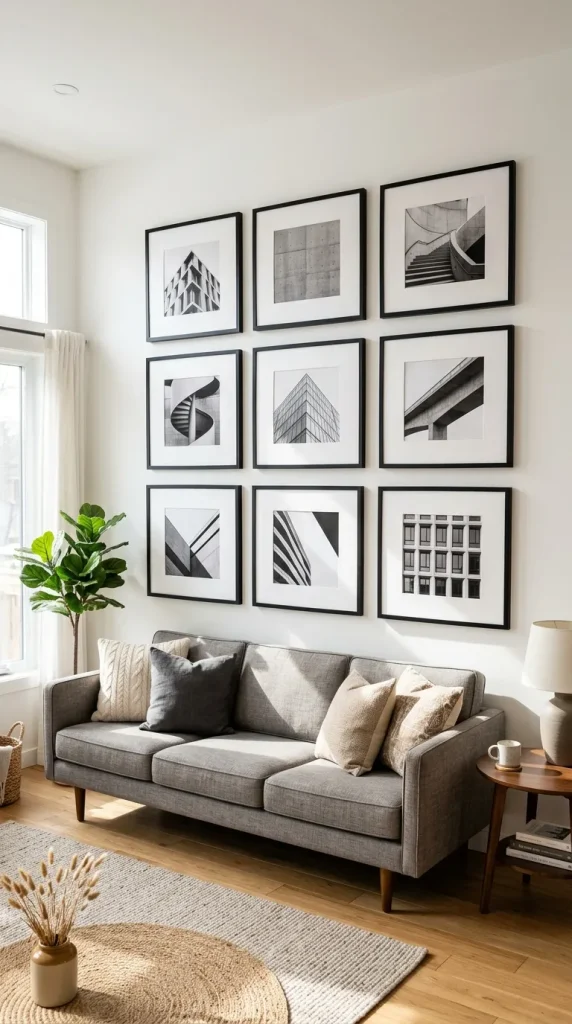
For the lover of order, clean lines, and minimalist design, a symmetrical grid layout is unmatched. This approach relies on a series of identical frames arranged in a precise geometric pattern—usually a $3 \times 3$ or $4 \times 2$ matrix. The key to making this work is consistency; use the same frame style, color, and matting for every single piece. Black-and-white architectural photography, botanical sketches, or minimal line art work beautifully here. This style grounds a room, bringing an instant sense of calm and upscale sophistication.
2. The Eclectic Collector
If your style leans bohemian, maximalist, or vintage, the eclectic gallery wall is your playground. Unlike the rigid grid, this layout thrives on contrast. Mix ornate, gilded vintage frames with sleek modern wood frames. Combine oil paintings, abstract watercolors, thrifted postcards, and even three-dimensional objects like small brass sculptures or woven baskets. The secret to keeping it cohesive rather than chaotic is choosing one underlying element to tie it together, such as a repeating accent color or a consistent spacing interval between frames.

3. The Floor-to-Ceiling Statement
Why stop at eye level? A floor-to-ceiling gallery wall makes a dramatic architectural statement, making short ceilings feel grander and large rooms feel incredibly cozy. Start your layout a few inches above the baseboard and extend it all the way to the crown molding. Because this style commands so much visual weight, it works best on a focal wall, such as behind your main sofa. Fill the space with a dense arrangement of art of varying sizes to create a rich, tapestry-like effect.

4. Monochromatic Drama
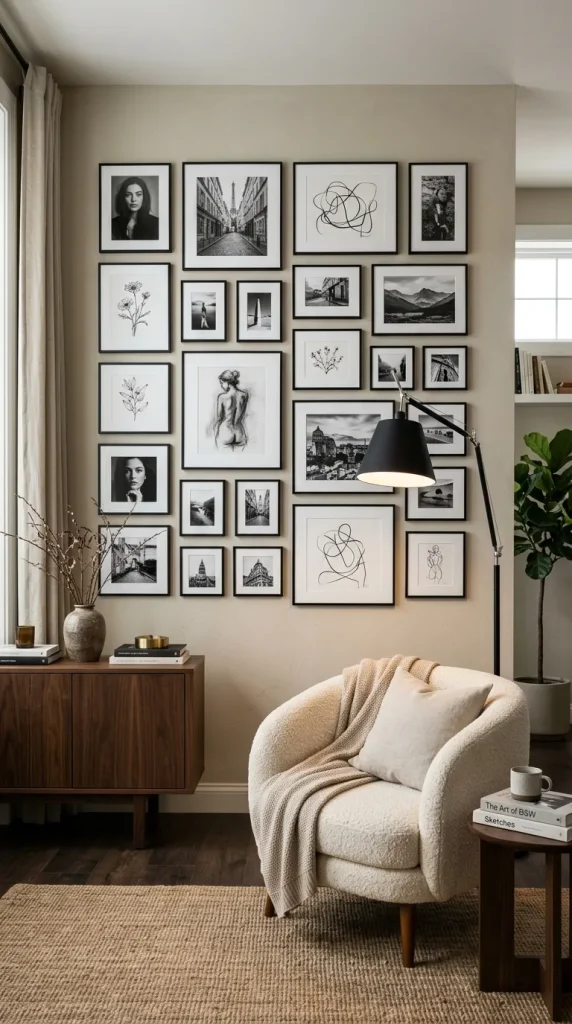
If you want to make a statement without overwhelming your living room with color, opt for a monochromatic theme. This is often achieved using black-and-white photography, charcoal sketches, and ink drawings. You can choose to match the frames to the art (sleek black frames with white mats) or introduce warmth by using natural oak frames. A monochromatic gallery wall is timeless, elegant, and ensures that your wall decor will never clash with changing seasonal textiles or furniture updates.
5. Mixed Media and Sculptural Elements
A gallery wall does not have to be restricted to flat paper and canvas. Introducing mixed media adds texture and depth to your living room. Consider weaving in non-traditional items: a vintage wooden oar, a ceramic wall planter with a cascading pothos plant, a small decorative mirror, or an antique textile hanging from a brass rod. These 3D elements break up the hard angles of traditional picture frames, making the wall feel dynamic, organic, and deeply personal.

6. The Ledges and Shelves Approach
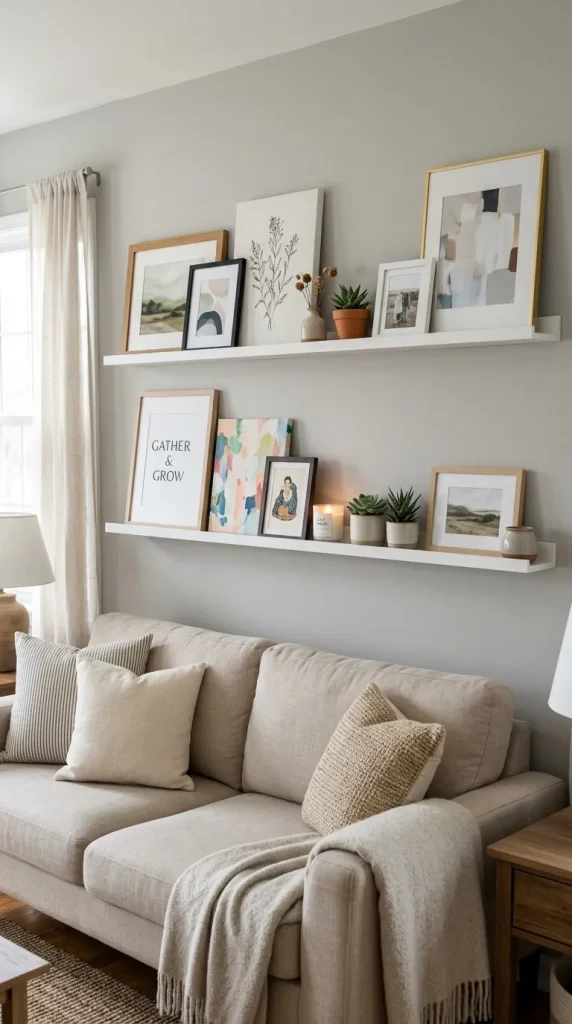
If you suffer from design commitment issues—or simply love to change your decor with the seasons—picture ledges are the perfect solution. By installing two or three long, floating ledges, you create a flexible stage for your art. You can overlap frames of different heights, lean small prints against larger canvases, and easily swap out artwork without ever drilling another hole in your wall. Add small trinkets, trailing plants, or candles along the ledges to add layers of visual interest.
7. Large-Scale Focal Cohesion
Sometimes, less is more. Instead of arranging dozens of tiny prints, choose two or three large-scale, oversized statement pieces. Hanging a massive triptych (a single piece of art split across three panels) or a pair of complementary abstract canvases creates a clean, impactful look. This style works exceptionally well in contemporary and mid-century modern living rooms, drawing the eye instantly to a single, powerful focal point.

8. The Collected Travelogue
Turn your living room into a storytelling hub by dedicating a wall to your travels. Instead of standard tourist souvenirs, frame unique mementos: a vintage subway map from New York, a beautiful fabric scrap from a market in Kyoto, ticket stubs from an unforgettable concert, or candid black-and-white snapshots of local streets. Every time you sit on your sofa, you will be reminded of your adventures, and it serves as an incredible conversation starter for guests.

9. Warm Organic Botanicals
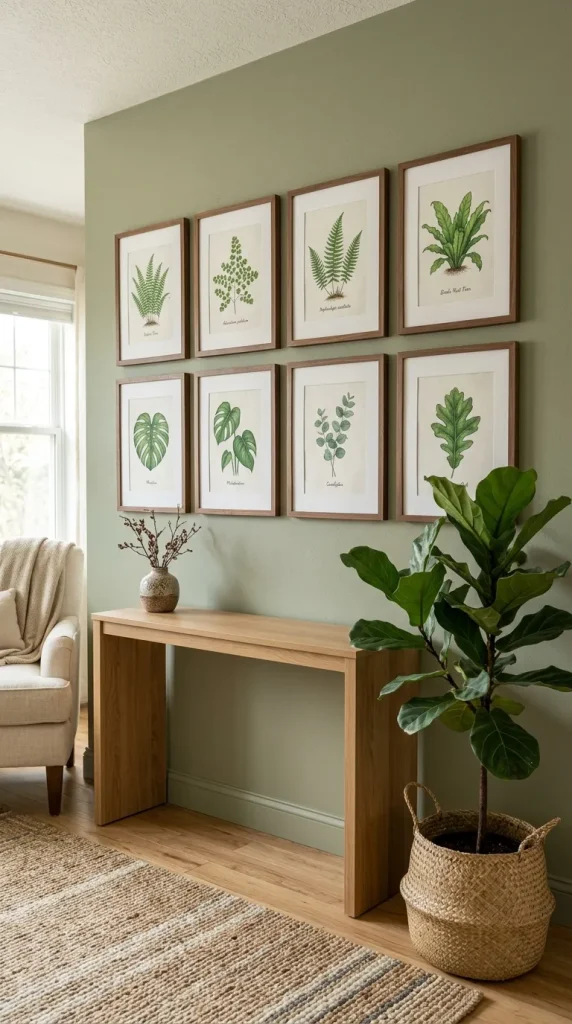
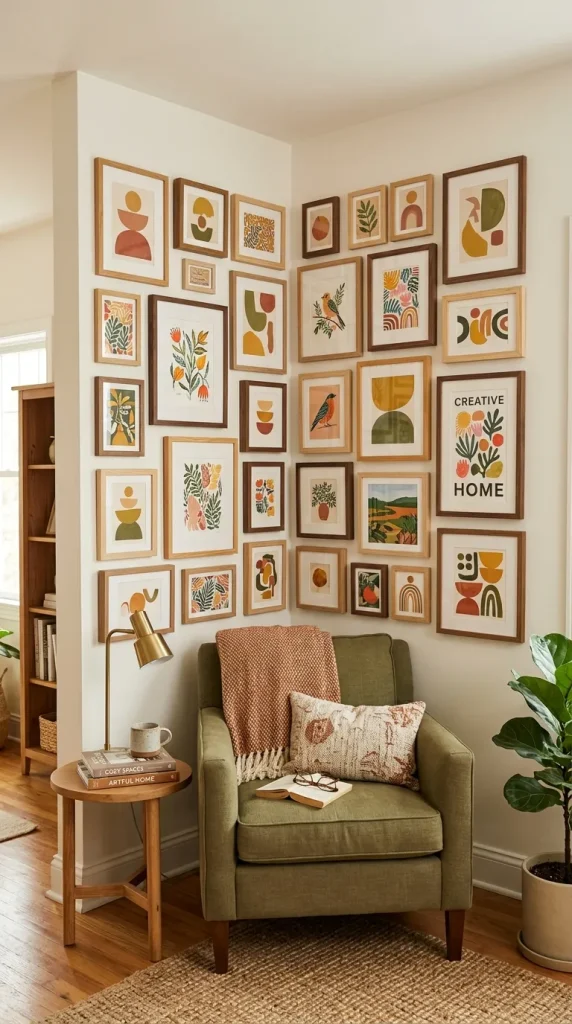
Bring the calming essence of nature indoors with a botanically themed gallery wall. This look can be achieved using vintage pressed fern frames, watercolor illustrations of local flora, or high-definition photography of serene landscapes. Pair these prints with natural materials like light oak, bamboo, or walnut frames. This aesthetic pairs wonderfully with linen sofas, jute rugs, and plenty of real houseplants scattered throughout the living room.
10. The Corner Wrap
Who says gallery walls have to stay flat on a single surface? A corner-wrapping gallery wall uses the architecture of your room to its advantage. By extending your art collection across an inside or outside corner, you connect two distinct spaces—like a living area and an entryway or a reading nook. This unexpected placement feels incredibly custom, cozy, and modern, turning an often-ignored architectural feature into a major design highlight.
Leave a Reply